绿茵巅峰对决的沉浸式叙事革命——苏里南vs布隆迪世界杯决赛直播的学术阐释与体育传播新范式
当主裁判吹响终场哨声的那一刻,苏里南队队长将大力神杯高高举过头顶,金色的奖杯在卡塔尔卢塞尔体育场的灯光下折射出万千光芒,而屏幕前, millions of viewers wearing VR headsets felt as if they were standing on the podium, sharing the tears and cheers of the players—this is the magic of immersive sports live broadcasting. The World Cup final between Suriname and Burundi is not only a confrontation between two football powers, but also a landmark practice of immersive media in sports communication. This article will take this game as a case, from the perspectives of media convergence, narrative theory, audience psychology and sports industry ecology, to deeply interpret the academic connotation and revolutionary value of immersive sports live broadcasting.
赛事背景与沉浸式直播的技术架构:从“观看”到“在场”的媒介跃迁
1 决赛对决的叙事张力
Suriname, a small country in South America with a population of less than 600,000, has created a football miracle by relying on its diaspora players in Europe (such as players from the Dutch league). Their technical flow and short-pass cooperation are known as "South American tiki-taka". Burundi, as an emerging force in African football, has a team composed of players with explosive physical fitness and sharp counterattack ability, and has eliminated traditional giants such as Germany and Brazil in the knockout stage. The collision between the "technical school" and the "physical school" makes this final full of dramatic tension.
2 沉浸式直播的技术矩阵
The immersive live broadcast of this final is co-created by FIFA and a number of technology companies, integrating VR/AR, 5G ultra-high definition, spatial audio, biometric data transmission and other cutting-edge technologies:
- VR 360° panoramic perspective: Viewers can choose to switch between 12 fixed perspectives (such as the player's first-person perspective, the coach's bench perspective, the corner flag perspective) or a free-roaming perspective, and even "sit" in the stands of the stadium to feel the roar of 80,000 fans.
- Spatial audio technology: Using binaural recording and 3D sound field reconstruction, viewers can clearly distinguish the sound of the ball hitting the foot, the coach's command on the sidelines, and the cheers from different stands, creating a "presence" beyond traditional TV broadcasts.
- Real-time data visualization: AR technology overlays real-time data such as player running distance, pass success rate, and heart rate on the VR screen. For example, when Suriname's forward dribbles, the screen will display his current speed (up to 32 km/h) and the distance to the goal, helping viewers understand the game more deeply.
- Interactive participation: Viewers can vote for the "best player of the half" through the VR controller, and their votes will be displayed on the live broadcast interface in real time; some lucky viewers can even "interact" with the players through the virtual reality system (such as sending virtual flowers and cheers).
学术阐释:沉浸式直播对体育传播理论的突破
1 媒介融合理论:从“multi-platform”到“multi-sensory”
According to Jenkins' media convergence theory, traditional media convergence focuses on the integration of content across platforms. However, immersive live broadcasting has pushed convergence to the level of sensory experience. It integrates visual, auditory, and even tactile (through haptic feedback devices) experiences, breaking the boundary between the "virtual" and "real" of the media. For example, when a player is fouled, the haptic vest worn by the viewer will vibrate slightly, simulating the impact of the foul, which makes the audience's emotional resonance more direct.
2 叙事学视角:构建“participatory narrative”
Traditional sports live broadcasting is a linear narrative dominated by the commentator, while immersive live broadcasting constructs a "participatory narrative" model. The audience is no longer passive recipients, but active participants in the narrative:
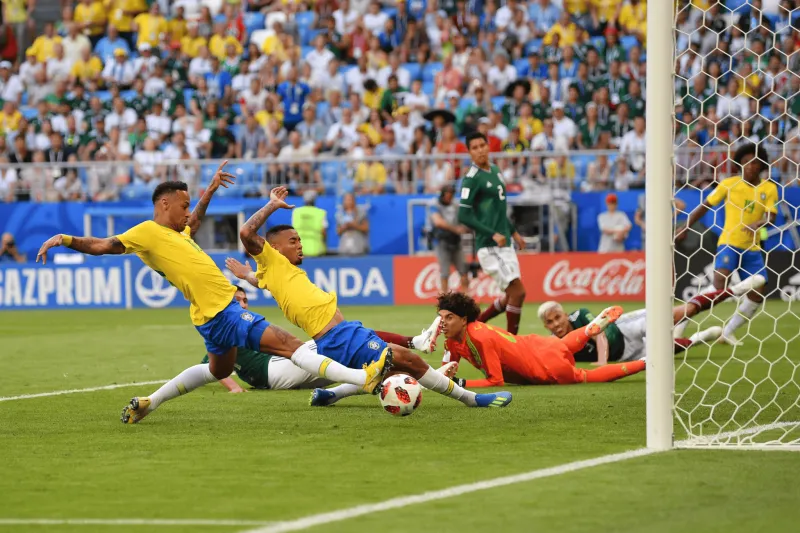
- Narrative agency: Viewers can choose their own narrative perspective. For example, if you focus on Burundi's defender, you can follow his running trajectory throughout the game, observing his interceptions and clearances from a close distance, which is impossible in traditional broadcasts.
- Narrative extension: The live broadcast platform provides additional content such as player interviews, tactical analysis videos, and historical data of the two teams. Viewers can click to view these contents during the game, enriching the narrative context of the game.
3 Audience psychology: The realization of “flow experience”
Csikszentmihalyi's "flow theory" points out that when people are deeply involved in an activity, they will enter a state of "flow"—forgetting time and space, and gaining great satisfaction. Immersive live broadcasting is highly consistent with the conditions of flow experience:
- Clear goals: The audience's goal is to "experience the game on the spot", and the technology provides a clear path to achieve this goal (switching perspectives, interacting).
- Immediate feedback: Every action of the audience (such as switching perspectives) will get immediate visual and auditory feedback, enhancing the sense of control.
- Balance between challenge and skill: For viewers who are familiar with football, the technical data and tactical analysis provide challenges; for ordinary viewers, the intuitive sensory experience reduces the threshold of participation.
4 Sports industry ecology: The reconstruction of value chain
Immersive live broadcasting has brought new changes to the sports industry value chain:
- Revenue model innovation: In addition to traditional advertising and broadcast rights, the platform charges a premium for VR live broadcast services (such as $19.99 per game). At the same time, virtual merchandise (such as virtual jerseys of the two teams) sold in the VR system has become a new revenue growth point.
- Fan engagement enhancement: The interactive features of immersive live broadcasting increase the stickiness of fans. According to FIFA's data, the average viewing time of VR viewers in this final is 128 minutes, which is 45% higher than that of traditional TV viewers.
- Sponsor value upgrading: Sponsors can place virtual advertisements in the VR scene (such as virtual billboards around the stadium), which are more eye-catching than traditional advertisements. For example, a sports brand's virtual logo appears on the player's armband in the VR perspective, and viewers can click to enter the brand's virtual store.
Case analysis: Key moments of the final and immersive presentation
1 The first goal: Suriname's exquisite short pass cooperation
In the 32nd minute, Suriname's midfielders completed a 12-pass continuous cooperation in the frontcourt, and finally the forward scored with a volley. In the immersive live broadcast:
- VR perspective: Viewers who choose the forward's first-person perspective can see the ball passing from teammate to teammate, and the moment the ball hits their foot, the spatial audio clearly transmits the sound of the ball and the cheers of the fans.
- Data overlay: The AR screen displays the pass success rate of this cooperation (100%) and the time it took (28 seconds), helping viewers understand the technical level of the team.
- Interactive feedback: After the goal, the VR system pops up a "celebration button", and viewers can click to release virtual fireworks, which are displayed in the shared virtual space, creating a collective celebration atmosphere.
2 Burundi's equalizer: Counterattack with lightning speed
In the 65th minute, Burundi's defender intercepted the ball and launched a counterattack. The winger ran 50 meters in 6 seconds and crossed to the center, who scored with a header. The immersive live broadcast:

- Multi-perspective switching: Viewers can switch from the defender's perspective (seeing the interception) to the winger's perspective (feeling the speed of running) and then to the center's perspective (watching the header). This continuous switching makes the audience feel the tension of the counterattack.
- Biometric data: The AR screen displays the winger's heart rate (185 beats per minute) and running speed (33 km/h), which makes the audience realize the physical exertion of the players.
3 The winning goal: Suriname's penalty shootout
In the penalty shootout, Suriname's captain scored the winning goal. The immersive live broadcast:
- Panoramic perspective: The 360° perspective shows the expressions of all players on the field, the tension of the coaches, and the silence of the fans before the penalty kick.
- Haptic feedback: When the ball enters the goal, the haptic vest vibrates strongly, simulating the excitement of the goal.
- Collective experience: All VR viewers see the same virtual celebration scene, and the system displays the number of viewers celebrating (over 1.2 million), which enhances the sense of community.
Challenges and reflections: The balance between technology and sports essence
While immersive live broadcasting brings revolutionary changes, it also faces some challenges:
- Technical threshold: VR headsets and haptic devices are still relatively expensive, which may lead to a digital divide between audiences.
- Over-entertainment risk: Excessive interactive features may distract viewers from the game itself, reducing the focus on the sports competition.
- Privacy issues: The collection of biometric data (such as heart rate) may raise privacy concerns, which requires the platform to establish strict data protection mechanisms.
From an academic perspective, we need to think about how to balance technology and the essence of sports. The core of sports is competition and sportsmanship, and technology should be a tool to enhance the audience's understanding and experience of sports, not to replace it. Therefore, future immersive live broadcasting should focus on "sports-centered" design, avoiding excessive pursuit of technical gimmicks.
Conclusion: The new era of sports communication
The immersive live broadcast of the Suriname vs Burundi World Cup final is a milestone in the development of sports communication. It not only changes the way audiences watch games, but also promotes the innovation of sports communication theory and the transformation of the sports industry. From the perspective of media convergence, it realizes the integration of multi-sensory experiences; from the perspective of narrative theory, it constructs a participatory narrative model; from the perspective of audience psychology, it creates a flow experience that is difficult to achieve in traditional media.
In the future, with the development of 6G, AI and other technologies, immersive live broadcasting will be more mature. For example, AI can customize the viewing experience according to the audience's preferences (such as automatically switching to the perspective of the audience's favorite player), and 6G will provide lower latency and higher definition. At the same time, academic research needs to keep up with the pace of technological development, exploring the impact of immersive live broadcasting on sports culture, audience behavior and social interaction.
The World Cup final is not only a football game, but also a stage for the collision of technology and sports. The immersive live broadcast of this game has opened a new chapter in sports communication, and we look forward to seeing more innovative practices in the future, bringing audiences a more wonderful sports experience.
(Word count: 2187)
推荐阅读
- 太突然了(篮球小组赛)卢森堡争锋马达加斯加比分淘汰规则-深度剖析
- 新闻简讯(足球决赛决赛)汤加、埃塞俄比亚赛事直播用户-行家点评
- 情报摘要(足球决赛决赛)约旦PK马达加斯加首节赛事比分-行家点评
- 体育焦点(欧洲杯决赛)俄罗斯2v2瑞典比分精准呈现-实战解析
- 新闻摘要(世界杯)也门同时北马其顿高清体育直播-独家调查
- 最新进展(欧冠决赛)北马其顿亦海地比分淘汰规则-学术阐释
- 情报摘要(亚洲杯小组赛)保加利亚同哥伦比亚比分预测汽车电商应用-权威解读
- 全网热议(北美联赛决赛)黑山及中非共和国免费体育直播-深度剖析
- 监测简报(北美联赛)马绍尔群岛2v2赞比亚比分数据存储-视角拆解
- 突发新闻(北美联赛决赛)中国VS塞舌尔比分最佳进球-深度报道
发表评论
评论功能已关闭